


Durham Conditions Matter
Consider clay-rich receiving soil, drainage and available repair space before choosing work.
Durham Septic Solutions is the #1 septic in Durham, NC. We provide septic pumping, septic cleaning, septic inspections, repairs, installation, and replacement for residential and commercial properties. We also handle drain field inspections, repairs, and replacement.
We have over 20 years of experience with project management, business oversight, and installation. Durham’s clay-rich Triassic Basin soils and wet-season drainage can affect how a drain field handles wastewater. We plan around the approved bedroom count, installed tank, usable repair area, and Durham County’s permitting requirements before recommending work. Expected service life depends on the installed product, site conditions and maintenance.
Consider clay-rich receiving soil, drainage and available repair space before choosing work.
Separate a tank fault, plumbing blockage, equipment issue and field problem.
Explain access, starting prices and the work included before scheduling.
Apply over 20 years of project management, business oversight and installation experience.
Use records, approved bedrooms and future improvement plans to guide recommendations.
Connect today’s service with sensible maintenance and any required next approval.
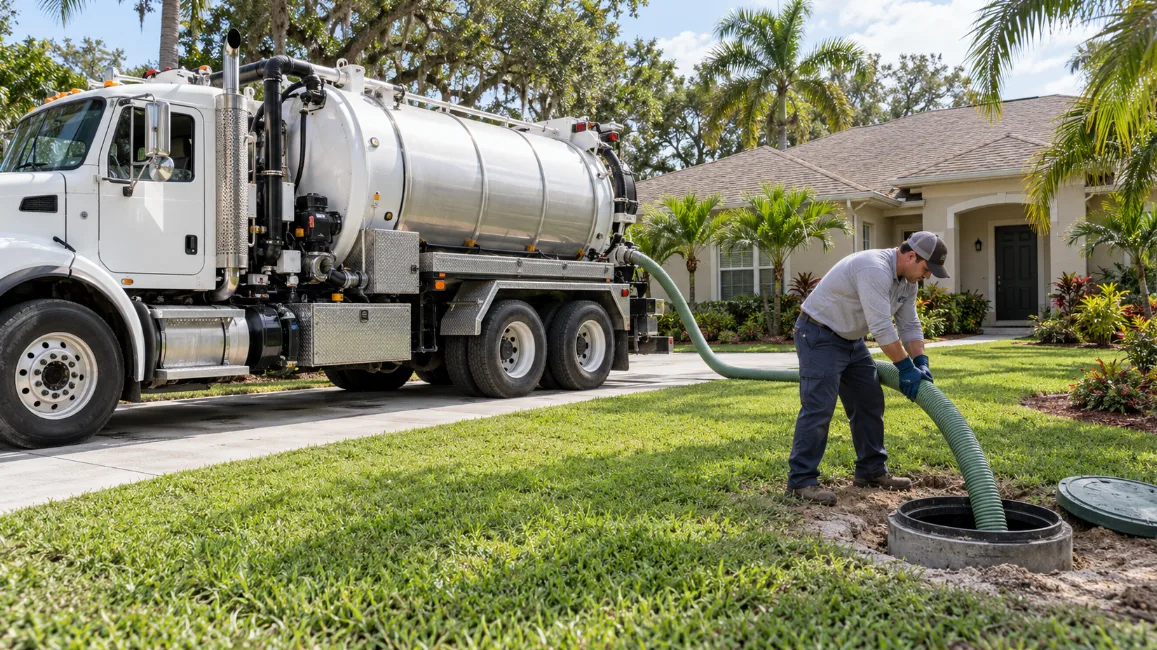
Routine care, a recurring backup or a new system: each starts with a clear scope and the property’s actual needs.
Septic tank pumping in Durham removes the sludge and floating waste that accumulate during normal use. We serve residential and commercial properties with a defined scope for tank capacity, access, pumping and approved disposal.
Explore Septic ServiceSeptic cleaning in Durham addresses suitable residue and deposits after the bulk contents are removed. Our team explains pumping, wash-down and any deeper-cleaning add-on so you can compare a clear scope for your home or business.
Explore Septic ServiceSeptic inspections in Durham document accessible tank and system conditions for maintenance, recurring symptoms or a real estate transaction. We define the inspection scope, review available records and explain access limitations before making recommendations.
Explore Septic ServiceSeptic repairs in Durham should correct a documented problem such as an outlet blockage, leaking connection, unsafe lid or faulty pump. We assess the affected component and explain when a repair is appropriate or broader replacement planning is needed.
Explore Septic ServiceSeptic installation and replacement in Durham connect the approved home use with suitable tank capacity, treatment and a usable drain field. New systems and replacements need site-specific planning, with existing components assessed before deciding what can remain.
Explore Septic ServiceEmergency septic pumping in Durham may provide relief when accumulated waste or a high tank level is part of the problem. Describe the active symptoms and location so access, ground conditions and the appropriate response can be assessed.
Explore Septic Service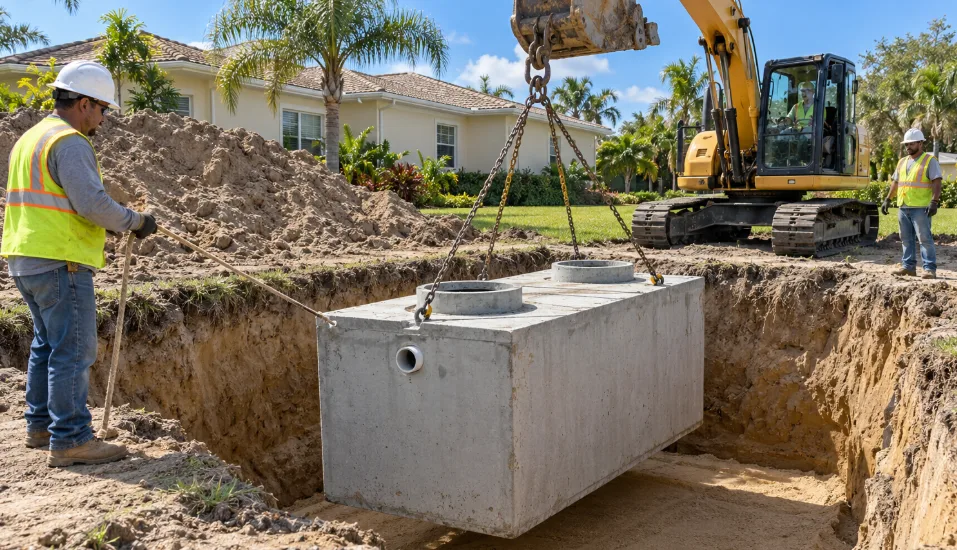
A tank can be sound while the field struggles. Review distribution, soil and groundwater before deciding on repair or replacement.
Drain field repair in Durham starts with the cause of poor flow. A damaged pipe, distribution component or dosing pump may be repairable, while clogged or unsuitable receiving soil can require a different plan.
Explore Drain Field ServiceA drain field inspection in Durham examines how wastewater leaves the tank and moves through the disposal area. It helps explain recurring trouble, wet spots or a property’s available septic layout before repairs or a purchase.
Explore Drain Field ServiceDrain field replacement in Durham creates an approved disposal area when the existing field can no longer function reliably. The tank may remain serviceable, but its capacity, condition and compatibility still need assessment.
Explore Drain Field Service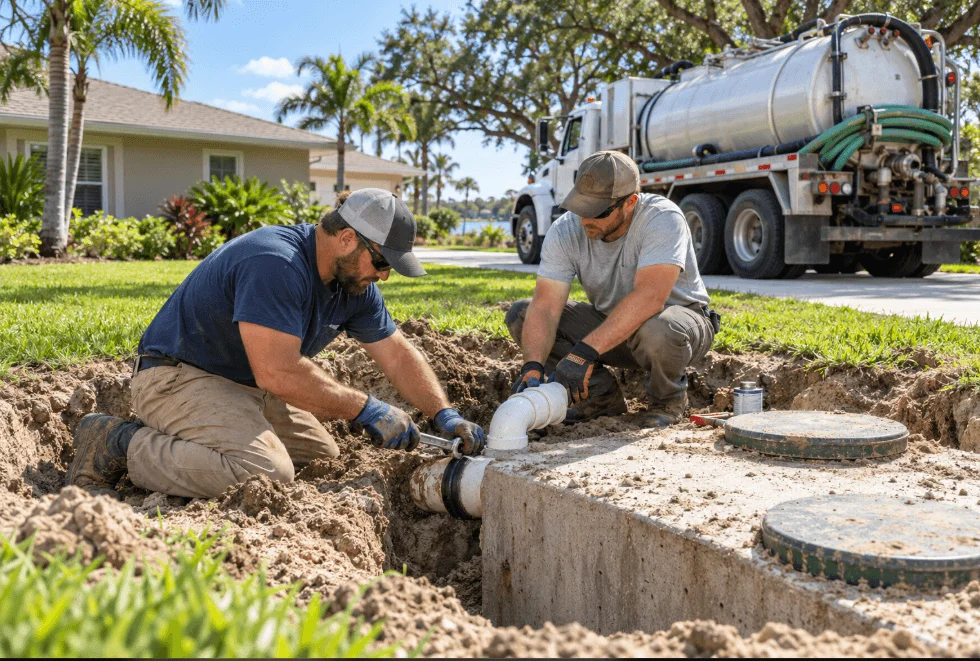
Durham County’s median listed-home size was 1,809 square feet in September 2026, according to Realtor.com data published by FRED. This describes homes offered for sale, not the average of all Durham homes or an inventory of septic-served properties. It is useful context for a home-size example, rather than a sizing formula.
For a three-bedroom home around that size, the standard residential example is 360 gallons per day of design flow and a 1,000-gallon minimum septic tank. A four-bedroom home can still have a 1,000-gallon minimum tank even though its standard flow rises to 480 gallons per day. Tank storage, approved treatment and drain field area are separate parts of the system. Existing tanks may follow older approvals: confirm the actual permit and tank markings.
Housing context: FRED / Realtor.com Durham County listings. Current design examples: North Carolina 18E rules, .0401 and .0801, updated September 2026. Floor areas in the guide’s examples do not determine the bedroom allowance.
Durham County Environmental Health’s On-Site Water Protection program evaluates septic sites and inspects construction. For the standard county route, the Improvement Permit establishes site suitability and the Construction Authorization approves the installation or repair scope. After the required installation checks, the Operation Permit documents approval for use. Authorized private professional pathways have different documentation and responsibilities.
Check the parcel’s sewer options before committing to a replacement. A nearby sewer line, a Durham mailing address or a neighbor’s septic system does not settle availability or jurisdiction. The City’s Northeast Creek septic-to-sewer cost-share project ended June 30, 2026; do not assume that funding is still offered.
Provide the address, parcel ID, acreage, ownership authorization, bedrooms, occupancy, intended use and water supply. Label property lines and corners and make the site accessible for evaluation.
Show buildings, tank and field locations, repair area, wells, waterlines, easements, rights-of-way, drainage and planned additions. Disclose wetlands and non-domestic wastewater so the review matches the actual property.
New construction, repair and an existing-system approval use different county forms. A deck, pool, reconnection or extra bedroom can change the review. Confirm scope before moving earth or ordering a tank.
Allow 4–6 business days for initial application coordination and a status check once the package is complete. This is our planning allowance, not a Durham County approval promise. Reserve additional time for soil evaluation, design, corrections and authorization; a new-system project may need several weeks before excavation can be scheduled. Ask Environmental Health for the current queue when you apply.
| Stage or route | Time reference | What it means |
|---|---|---|
| Initial application coordination | 4–6 business days | Our allowance to check completeness and status; not permit issuance. |
| Qualifying professional submittals under G.S. 130A-335(a3)/(a5) | 5 business days | Statutory completeness review of the required package, fee and professional documents; not every county application. |
| Standard county Improvement Permit decisions | 60 / 90 days | State funding-accountability thresholds for repeated failure to issue or deny complete applications: 60 for conventional/accepted, 90 for provisional/innovative. Not an advertised wait or automatic approval. |
| Installation and final verification | Scheduled separately | Coordinate approved design, installer, required checks and Operation Permit. Keep construction and agency timing separate. |
Durham’s FY 2026–27 performance report measures the interval from application submission to the initial site visit. It does not measure full permit approval, and one property may need multiple visits. Missing plans, inaccessible boundaries, wet soil, a difficult repair footprint, a revised house plan and staff workload can all extend the project.
The county’s published schedule lists a $250 Improvement Permit application with a two-acre limit and a separate $200 Type I/II Construction Authorization. Those entries total $450 for that example, before other applicable charges. Different system types, professional submittals, larger tracts and revisits have different fees. Confirm the current invoice with the county; these are agency charges, separate from pumping, design, excavation or installation.
Reviewed October 28, 2026. County applications · Fee schedule · Professional completeness reviews · Improvement Permit / Construction Authorization law · Inspection and Operation Permit law · County initial-visit performance measure. Confirm the current office schedule before making construction commitments.
Unremoved sludge and scum can reach the field and reduce the soil’s ability to accept wastewater.
Leaking fixtures, concentrated laundry and increased occupancy can overload the system.
Unsuitable waste can obstruct components and interfere with normal treatment.
Stormwater and slow-draining receiving soils can leave too little capacity for normal wastewater.
Traffic, roots, grading and construction can damage pipes or compact the field.
Worn equipment, an unreviewed addition or missed maintenance can undermine performance.
A septic system is more than a tank. Its storage capacity, treatment process and drain field each do a different job. Use this guide to understand home size, tank materials, expected lifespan and Durham conditions before choosing a service.
A 1,809-square-foot listing is a useful Durham County market reference, not a promise about an individual home. Review bedrooms, occupancy, permitted use and additions before deciding whether the current system still fits. A compact four-bedroom house can have a greater approved demand than a larger three-bedroom house.
| Illustrative home | Standard design flow | Minimum tank liquid capacity |
|---|---|---|
| 2 bedrooms · 1,200 sq ft | 240 gallons/day | 1,000 gallons |
| 3 bedrooms · 1,809 sq ft | 360 gallons/day | 1,000 gallons |
| 4 bedrooms · 2,600 sq ft | 480 gallons/day | 1,000 gallons |
| 5 bedrooms · 3,200 sq ft | 600 gallons/day | 1,250 gallons |
Derived from 15A NCAC 18E .0401 and .0801, current working copy updated September 2, 2026. Floor areas are illustrative; bedrooms and approved use drive these examples. Higher occupancy, special equipment and approved designs can change requirements. These figures do not establish the installed capacity of an older system.
For ordinary individual homes with up to four bedrooms, the current state table starts at 1,000 gallons. Five bedrooms start at 1,250 gallons. More bedrooms, multiple dwelling units, commercial waste and upstream pumping arrangements need their own calculations. Ask for a written design rather than selecting a tank by bathroom count.
Storage gallons are not gallons per day. The tank separates solids; downstream treatment and a properly sized disposal area handle the effluent. A new tank cannot compensate for a field with unsuitable receiving soil.
Rigid, heavy tanks need lifting access and a suitable base. Inspect walls, lids, seams and inlet/outlet connections for deterioration or leakage.
Lightweight composite tanks need the correct support and protection during handling. Check fittings and follow the approved model’s installation instructions.
Molded tanks need proper burial, bedding and backfill. Groundwater, deformation and product-specific anchoring requirements belong in the installation plan.
The approved model and its condition matter more than material alone. Keep equipment access available, secure the lids and have unsafe covers repaired promptly. Never enter a septic tank.
Expected service life depends on the installed product, site conditions and maintenance. A tank shell, drain field, pump, float and aerator can have different replacement schedules. A recommendation should identify which component failed and why, instead of assuming every part must be replaced together.
A gravity system relies on suitable elevation and receiving soil. Pumped distribution moves effluent where the layout requires it. Advanced treatment adds equipment and ongoing maintenance requirements. The soil evaluation, approved daily flow and permit determine what fits; advanced equipment is not an automatic cure for an unsuitable site.
Businesses need a separate review of use, occupancy and wastewater strength. Restaurants, salons, offices and multiple dwellings should not borrow a household bedroom calculation. Identify grease-interceptor service and process wastewater separately when requesting an estimate.
Parts of Durham’s Triassic Basin have slow-draining clay and shallow rock. A large tank does not create more usable soil. A site evaluation must establish the right field layout and loading for the actual parcel.
Winter wetness and storm runoff can leave the field unable to accept normal wastewater. Keep roof and yard drainage away from the system. A pump-out does not remove surrounding groundwater.
A new bedroom, deck, pool or driveway can conflict with the original approval or reserve area. Locate both the working field and repair area before finalizing a project layout.
An older Durham property may have a different tank size or treatment arrangement than a new approval. Records, tank markings and inspection findings are more useful than a guess based on the home’s appearance.
Filters, distribution boxes, floats and dosing equipment can interrupt flow even when the tank shell is sound. Recurring high levels or an alarm need diagnosis before another service is chosen.
Failing systems can affect local creeks. Check sewer availability during replacement planning. The Northeast Creek cost-share funding ended June 30, 2026; ask about current options without assuming an old program remains open.
Local context: City geology, NC Geological Survey guidance, Little Lick Creek watershed assessment and City project status. General failure and maintenance guidance: NC State Extension. These are planning concerns, not a ranking of local failure frequency.
Ask Durham County for the existing septic and well records using the site address and parcel identifiers. Keep the tank capacity, installation layout, repair area and service history together. A condition inspection for a home purchase is separate from agency authorization for an addition, repair or replacement. Review the Durham permit stages and timing above.
Practical answers for Durham homes and businesses.
The current North Carolina minimum tank example for an individual home with up to four bedrooms is 1,000 gallons. Three bedrooms normally represent 360 gallons per day of design flow. Existing approvals, higher occupancy and special configurations need review.
It helps describe the home, but the current household table uses bedrooms. Approved use, occupancy and the site design still matter; bathrooms alone do not determine capacity.
Allow 4–6 business days for initial application coordination and a status check once the package is complete. This is our planning allowance, not county approval timing. Site evaluation, design and authorization may require several weeks. Confirm the current Durham County queue.
No. G.S. 130A-335 provides a completeness-review period for qualifying professional submittals. It is not a general five-day approval promise for every septic application.
Runoff, groundwater and slow-draining soil can limit the field’s receiving capacity. A leak, blockage or pump fault can produce similar symptoms, so diagnosis matters.
Capacity, measured solids, occupancy and water use determine the interval. Many conventional households use a three-to-five-year planning interval, while treatment equipment may require more frequent servicing.
Have the system and repair area located and seek the appropriate Durham County existing-system review before finalizing the plan.
Yes. Describe the facility use, capacity, access and waste stream. Commercial design and grease-interceptor work need a separate scope.
No. A submission does not confirm delivery, dispatch or an appointment. Reduce water use and obtain prompt assistance for active sewage overflow.
Tell us where you are, what is happening and the service you need.